

Enramycin 8% is a well - known feed additive in the livestock and poultry industry, valued for its antibacterial properties and contributions to animal health. One of the frequently asked questions by our customers is whether Enramycin 8% is soluble in water. As a trusted supplier of Enramycin 8%, I'm here to delve into this topic in detail.
Understanding Enramycin 8%
Enramycin is a polypeptide antibiotic produced by Streptomyces fungicidicus. The 8% formulation means that in the product, 8% of the total mass is pure enramycin, and the rest is usually a carrier or excipient that helps with stability, storage, and ease of use. This antibiotic is mainly used in animal feed to promote growth and prevent certain bacterial diseases. It has a strong inhibitory effect on Gram - positive bacteria, such as Staphylococcus aureus and Streptococcus spp., which are common pathogens in livestock and poultry.
Solubility Characteristics
When it comes to the solubility of Enramycin 8% in water, the situation is a bit complex. Enramycin itself has relatively low solubility in water. This is because of its chemical structure, which consists of a large polypeptide chain. Polypeptides often have a complex three - dimensional structure with various functional groups that can interact with each other, making it difficult for water molecules to break these interactions and dissolve the compound.
However, the 8% formulation might have different solubility behavior compared to pure enramycin. The carriers and excipients in the 8% product can sometimes enhance or modify the solubility. For example, some carriers might act as dispersants, helping to break down the enramycin particles into smaller ones and allowing them to be more evenly distributed in water. But even with these additives, the solubility of Enramycin 8% in water is still limited.
In practical applications, when Enramycin 8% is added to water, it may form a suspension rather than a true solution. A suspension is a heterogeneous mixture where the solid particles (in this case, enramycin and its associated components) are dispersed in the liquid (water) but do not dissolve completely. Over time, the particles may settle at the bottom of the container if the mixture is left undisturbed.
Factors Affecting Solubility
Several factors can influence the solubility of Enramycin 8% in water:
-
Temperature: Generally, an increase in temperature can enhance the solubility of many substances. Higher temperatures provide more kinetic energy to the water molecules, allowing them to more effectively interact with the enramycin particles. However, for enramycin, excessive heat may also cause the degradation of the antibiotic, reducing its effectiveness. So, there is an optimal temperature range for attempting to dissolve Enramycin 8% in water, and this range needs to be carefully determined to balance solubility and stability.
-
pH: The pH of the water can also play a role. Enramycin's solubility may vary depending on whether the water is acidic, neutral, or alkaline. In some cases, adjusting the pH to a certain value can increase the solubility by altering the charge on the enramycin molecules and the interactions between them and water molecules. But again, extreme pH values can also lead to the decomposition of enramycin.
-
Agitation: Stirring or shaking the mixture of Enramycin 8% and water can improve the dispersion of the particles. Mechanical agitation helps to break up larger clumps of enramycin and increases the contact area between the solid and the water, promoting a more uniform distribution. However, it does not change the fundamental solubility limit of enramycin in water.
Comparison with Other Feed Additives
To better understand the solubility characteristics of Enramycin 8%, it's useful to compare it with other similar feed additives. For example, Lincomycin HCl 4.4% has relatively good solubility in water. Lincomycin HCl is a lincosamide antibiotic, and its chemical structure allows it to interact more readily with water molecules. This makes it easier to incorporate into drinking water for animals, ensuring uniform dosage.
Another example is Florfenicol 10%. Florfenicol is a broad - spectrum antibiotic, and its solubility in water is also better than that of Enramycin 8%. It can dissolve to a certain extent, forming a solution that can be easily administered to animals through the water supply.
Thiamulin 10% is also a well - known feed additive. Thiamulin has a solubility profile that is different from Enramycin 8%. It can be more soluble under certain conditions, which gives it an advantage in applications where water - based administration is preferred.
Practical Applications and Solutions
Despite its limited water solubility, Enramycin 8% still has important applications in the animal industry. Since it is mainly used as a feed additive, it is usually mixed directly with animal feed. When added to feed, the solubility in water is not a major concern. The feed provides a solid matrix where the enramycin can be evenly distributed, and animals consume it along with the feed.
However, in some cases, there may be a need to administer Enramycin 8% through the water supply. For example, when it is difficult to ensure uniform consumption of feed, or when there is a need for a quick - acting treatment. In such situations, some strategies can be employed to improve the dispersion of Enramycin 8% in water.

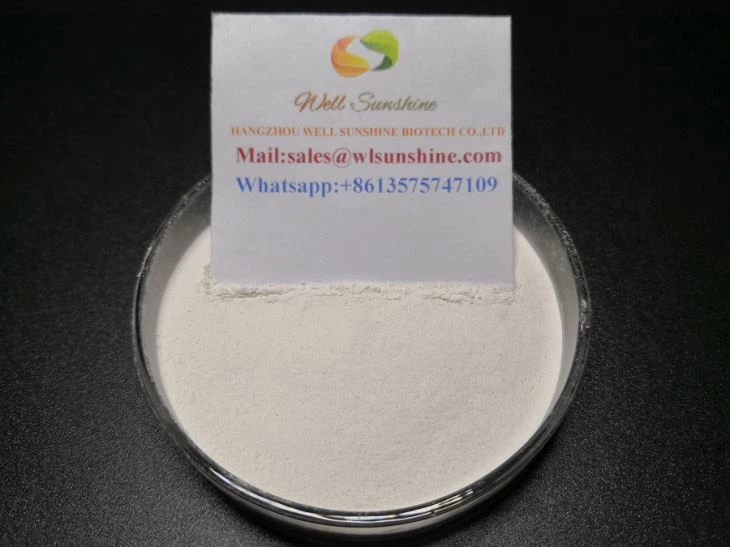
One approach is to use a dispersing agent. Dispersing agents can reduce the surface tension between the enramycin particles and water, helping to keep the particles suspended for a longer time. Another option is to use a mechanical mixing device, such as a high - speed stirrer or a homogenizer, to break down the particles and improve the uniformity of the suspension.
Conclusion
In conclusion, Enramycin 8% has limited solubility in water due to the nature of enramycin's chemical structure. While the 8% formulation may have some differences in solubility behavior compared to pure enramycin, it still forms a suspension rather than a true solution in most cases. Temperature, pH, and agitation can affect the solubility and dispersion of Enramycin 8% in water, but these factors need to be carefully controlled to avoid degradation of the antibiotic.
As a supplier of Enramycin 8%, we understand the challenges and requirements of our customers. We are committed to providing high - quality products and technical support. If you are interested in purchasing Enramycin 8% or have any questions about its application, please feel free to contact us for further discussion and negotiation. We look forward to working with you to meet your animal health and production needs.
References
- "Antibiotics in Animal Feed: Chemistry, Efficacy, and Feed Technology" by various authors.
- Research papers on the solubility of polypeptide antibiotics in water from scientific journals such as "Journal of Agricultural and Food Chemistry".