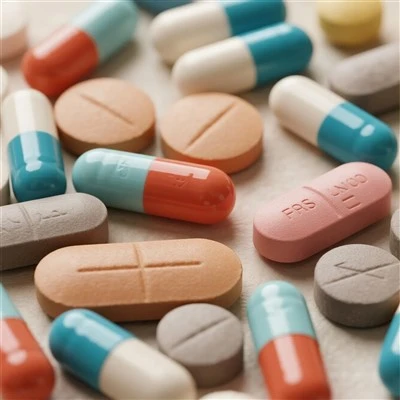

What is Erythromycin Tablets?
Pharmacodynamics: Erythromycin is a macrolide antibacterial agent. Its activity against Gram-positive bacteria is similar to penicillin, but it possesses a broader antibacterial spectrum. Susceptible Gram-positive bacteria include Staphylococcus aureus (including penicillin-resistant strains), Streptococcus pneumoniae, Streptococcus spp., Bacillus anthracis, Listeria monocytogenes, Clostridium septicum, and Clostridium chauvoei. Susceptible Gram-negative bacteria include Haemophilus influenzae, Neisseria meningitidis, Brucella, and Pasteurella. Additionally, it demonstrates good efficacy against Campylobacter, Mycoplasma, Chlamydia, Rickettsia, and Leptospira. The antibacterial activity of erythromycin is enhanced in alkaline solutions, with gradual increases in activity as pH rises from 5.5 to 8.5, but becomes very weak at pH below 4.
Bacteria can readily develop high-level resistance to erythromycin via chromosomal mutation, which may emerge during therapy. Plasmid-mediated resistance is also common, primarily through methylation of the drug target site. Cross-resistance between erythromycin and other macrolides or lincomycin is frequently observed.
Pharmacokinetics: Both erythromycin base and stearate are readily degraded by gastric acid when administered orally. The bioavailability is influenced by the salt form, formulation, gastrointestinal acidity, and presence of food in the stomach. Only enteric-coated formulations are adequately absorbed. After absorption, it is widely distributed in tissues and body fluids, but penetration into cerebrospinal fluid is poor. Plasma protein binding ranges from 73% to 81%. The drug crosses the placental barrier into fetal circulation, achieving serum concentrations 5%–20% of maternal levels. Milk concentrations reach approximately 50% of blood levels. A small fraction is metabolized in the liver to inactive N-demethylerythromycin, and it is primarily excreted unchanged in bile, with only 2%–5% of the dose excreted unchanged in urine. The elimination half-life in dogs and cats is 1–1.5 hours.
What is the Physicochemical Properties of Erythromycin Tablets?
This product is a white or off-white tablet.
Uses
What is Erythromycin Tablets used for?
Macrolide antibiotic. Primarily used for penicillin-resistant staphylococcal infections, and also for other Gram-positive bacterial and Mycoplasma infections.
Dosage
How much Erythromycin Tablets should be given to an animal?
Oral administration: Single dose: 0.4–0.8 tablets per 10kg body weight for dogs and cats. Administer twice daily for 3–5 consecutive days.
Side Effects
What are the potential side effects of Erythromycin Tablets in different animal species?
(1) Esterified erythromycin may be hepatotoxic, manifesting as cholestasis, and can also cause vomiting and diarrhea, especially at high doses.
(2) Dose-dependent gastrointestinal disturbances (e.g., vomiting, diarrhea, abdominal pain, anorexia) commonly occur after oral administration of erythromycin, likely due to its stimulatory effect on smooth muscle.
What are the common dosage forms of Erythromycin Tablets?
0.25g (250,000 units).
What are the Precautions of Erythromycin Tablets?
(1) This product is incompatible with acidic substances.
(2) Oral administration is susceptible to degradation by gastric acid; enteric-coated tablets should be used.
(3) Erythromycin is a microsomal enzyme inhibitor and may inhibit the in vivo metabolism of certain drugs.
(4) No withdrawal period is required.
Hot Tags: erythromycin tablets, manufacturers, suppliers, factory, wholesale, custom