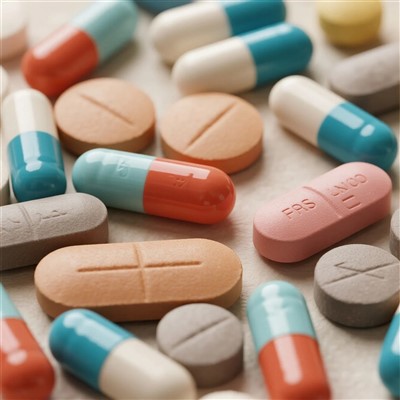

What is Sulfamethoxydiazine Tablets?
Pharmacodynamics: This product demonstrates good antibacterial activity against both Gram-positive and Gram-negative bacteria, such as Streptococcus pyogenes, Salmonella, and Klebsiella pneumoniae. Sulfonamides structurally resemble *p*-aminobenzoic acid (PABA) and compete with it for bacterial dihydrofolate synthase, thereby inhibiting the synthesis of dihydrofolic acid. This ultimately disrupts nucleic acid synthesis and suppresses bacterial growth and reproduction. The action of sulfonamides can be antagonized by PABA and its derivatives (e.g., procaine, tetracaine). Additionally, pus and tissue breakdown products can supply essential materials for bacterial growth, further antagonizing sulfonamide efficacy. The antibacterial activity of this product is slightly weaker than that of sulfadiazine, but it exhibits strong inhibitory effects against coccidia and Toxoplasma.
Pharmacokinetics: This product is rapidly absorbed after oral administration, has a low acetylation rate (12%–14% in cattle), and poses a low risk of crystalluria. The duration of effective blood concentrations varies among species: 8.6 hours in pigs, 10.3 hours in goats, and 16.8 hours in sheep. The elimination half-life after oral administration in horses is 17.1 hours.
What is the Physicochemical Properties of Sulfamethoxydiazine Tablets?
This product is a white or slightly yellow tablet.
Uses
What is Sulfamethoxydiazine Tablets used for?
Sulfonamide antibacterial agent. Primarily used for infections caused by susceptible bacteria, and also effective against coccidial infections.
Dosage
How much Sulfamethoxydiazine Tablets should be given to an animal?
Oral administration: Single dose: For livestock, initial dose of 1–2 tablets per 10kg body weight, maintenance dose of 0.5–1 tablet per 10kg body weight. Administer once or twice daily for 3–5 consecutive days.
Side Effects
What are the potential side effects of Sulfamethoxydiazine Tablets in different animal species?
(1) Sulfamonomethoxine or its metabolites may precipitate in urine, with crystallization, crystalluria, hematuria, or renal tubular obstruction more likely to occur at high doses or with prolonged administration.
(2) Oral administration in horses may cause diarrhea.
What are the common dosage forms of Sulfamethoxydiazine Tablets?
0.5g.
What are the Precautions of Sulfamethoxydiazine Tablets?
(1) May crystallize in the urinary tract. Ensure adequate water intake for treated animals. Administer with an equivalent amount of sodium bicarbonate when used at high doses or for prolonged periods.
(2) Use with caution in animals with impaired renal function due to reduced excretion.
(3) May disrupt intestinal flora. Prolonged use can reduce the synthesis and absorption of B vitamins and vitamin K; supplement accordingly.
(4) Monitor for cross-allergic reactions. Discontinue immediately and provide symptomatic treatment if allergic reactions occur.
(5) Withdrawal period: Livestock: 28 days; Milk discard period: 7 days.
Hot Tags: sulfamethoxydiazine tablets, manufacturers, suppliers, factory, wholesale, custom