

The "Green" Catalyst for Sustainable Animal Nutrition
In the evolving landscape of modern animal husbandry, the industry is increasingly shifting toward sustainable and safe practices. A critical component of this shift is the adoption of feed enzyme preparations. While the potential of adding enzymes to feed was recognized in the 1950s, their application gained widespread acceptance by the 1990s. For instance, in European countries, over 80% of broiler feed relying on viscous grains like wheat utilizes corresponding enzyme preparations.
What Are Feed Enzyme Preparations?
Enzymes are defined as proteins and natural substances produced by living organisms. Feed enzyme preparations are biological products extracted from animal cells, plant cells, or microbial fermentation broths using appropriate physical and chemical methods, processed to meet specific quality standards to ensure stable catalytic function.
As bioactive natural catalysts, enzymes are recognized as "green" additives because they have no toxic side effects and leave no residues.
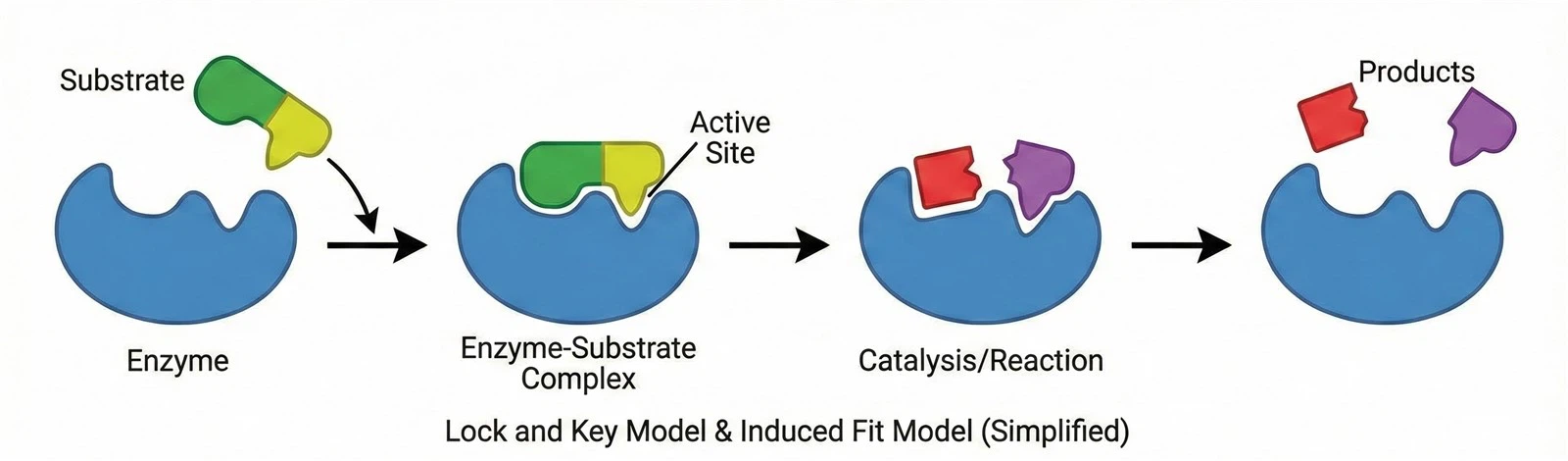
The Role of Enzymes in the "Antibiotic-Free" Era
In the global wave of "reducing, banning, and replacing antibiotics," the development and application of feed enzymes have become a vital sector in the feed and breeding industries. They act as a new, efficient feed additive that supports the shift away from reliance on antibiotics.
By applying enzyme preparations in feed, producers can reduce the use of additives harmful to humans, such as antibiotics, thereby obtaining high-quality, safe animal products. Furthermore, enzymes help control and prevent animal diseases, increase nutrient absorption rates, and improve overall animal health.
Economic and Environmental Benefits
Beyond health benefits, feed enzymes offer significant economic and environmental advantages. They aid in opening up new feed resources and lowering feed production costs while simultaneously improving animal production performance. Additionally, they contribute to environmentally sustainable development by reducing pollution from aquaculture waste.
Classification of Feed Enzymes
Biologically, enzymes in metabolic pathways are divided into six categories: oxidoreductases, transferases, hydrolases, lyases, isomerases, and ligases. However, the majority of enzyme preparations used industrially in feed are hydrolases.
Based on the different substrates they act upon, the main enzymes used in feed include:
Amylase and Glucanase
Protease and Keratinase
Cellulase and Hemicellulase
Phytase
Lipase
Xylanase and Pectinase
Currently, with the exception of phytase which is available as a single product, most feed enzyme preparations used today are complex preparations containing multiple enzymes to maximize their effectiveness.
-
![β-Mannanase]() β-Mannanaseβ-Mannanase belongs to the family of hemicellulose hydrolase that splits β-1,4-glycosidic bond in β-mannan, galactomannan and gluco-mannan producing mannose oligosaccharides and mannose. Meanwhile,read more
β-Mannanaseβ-Mannanase belongs to the family of hemicellulose hydrolase that splits β-1,4-glycosidic bond in β-mannan, galactomannan and gluco-mannan producing mannose oligosaccharides and mannose. Meanwhile,read more -
![β-Glucanase For Feed]() β-Glucanase For Feedβ -Glucanase represents a group of carbohydrate enzymes which break down glycosidic bonds within beta-glucan. It forms the main constituent of fungal cell walls and could be a potential structuralread more
β-Glucanase For Feedβ -Glucanase represents a group of carbohydrate enzymes which break down glycosidic bonds within beta-glucan. It forms the main constituent of fungal cell walls and could be a potential structuralread more -
![β-Galactosidase]() β-Galactosidaseβ-Galactosidase (EC 3.2.1.23, beta-gal or β-gal; systematic name β-D-galactoside galactohydrolase) is a glycoside hydrolase enzyme that catalyzes hydrolysis of terminal non-reducing β-D-galactoseread more
β-Galactosidaseβ-Galactosidase (EC 3.2.1.23, beta-gal or β-gal; systematic name β-D-galactoside galactohydrolase) is a glycoside hydrolase enzyme that catalyzes hydrolysis of terminal non-reducing β-D-galactoseread more -
![α-Galactosidase For Feed]() α-Galactosidase For Feedα-galactosidase is an enzyme used to hydrolyze or break α-1, 6-glycosidic bonds into galactosyl oligosaccharides (α-galactosides), liberating simpler, more usable sugars and eliminating itsread more
α-Galactosidase For Feedα-galactosidase is an enzyme used to hydrolyze or break α-1, 6-glycosidic bonds into galactosyl oligosaccharides (α-galactosides), liberating simpler, more usable sugars and eliminating itsread more -
![Xylanase For Feed]() Xylanase For FeedXylanases breakdown xylan, a polysaccharide found in plant cell walls, through a process called hydrolysis. Our enzyme works by cleaving the backbone of xylan, which is made up of xylose residuesread more
Xylanase For FeedXylanases breakdown xylan, a polysaccharide found in plant cell walls, through a process called hydrolysis. Our enzyme works by cleaving the backbone of xylan, which is made up of xylose residuesread more -
![Pullulanase]() PullulanasePullulanase is a kind of heat stable debranching enzyme (starch α-1,6-glucosidase) which can be applied in low pH condition and hydrolyze the α-1,6-D-glucoside bond for producingread more
PullulanasePullulanase is a kind of heat stable debranching enzyme (starch α-1,6-glucosidase) which can be applied in low pH condition and hydrolyze the α-1,6-D-glucoside bond for producingread more -
![Phytase For Feed]() Phytase For FeedIt is heat-stable and tolerant to pepsin and trypsin. It can break down indigestible phytic acid (phytate) and release digestible phosphorus, calcium, and other nutrients. As an animal feed additiveread more
Phytase For FeedIt is heat-stable and tolerant to pepsin and trypsin. It can break down indigestible phytic acid (phytate) and release digestible phosphorus, calcium, and other nutrients. As an animal feed additiveread more -
![Pectinase For Feed]() Pectinase For FeedPectinase is a group of enzymes that break down a core component of plant cell walls. Enzymes are proteins that accelerate the rate of reaction. These enzymes are a ubiquitous part of the fruit juiceread more
Pectinase For FeedPectinase is a group of enzymes that break down a core component of plant cell walls. Enzymes are proteins that accelerate the rate of reaction. These enzymes are a ubiquitous part of the fruit juiceread more -
![Neutral Protease]() Neutral ProteaseThe neutral protease is a protease inscribed, refined and extracted by microfiltration technology, ultrafiltration and vacuum lyophilization after culture of submerged fermentation of bacillusread more
Neutral ProteaseThe neutral protease is a protease inscribed, refined and extracted by microfiltration technology, ultrafiltration and vacuum lyophilization after culture of submerged fermentation of bacillusread more -
![Medium-Temperature α-Amylase]() Medium-Temperature α-AmylaseMedium temperature amylase can hydrolyze soluble starch, straight chain starch, glycogen, etc. in a medium temperature (60-85℃) environment with high efficiency. By randomly cutting the a-1,4read more
Medium-Temperature α-AmylaseMedium temperature amylase can hydrolyze soluble starch, straight chain starch, glycogen, etc. in a medium temperature (60-85℃) environment with high efficiency. By randomly cutting the a-1,4read more -
![Lipase For Feed]() Lipase For FeedLipase is an enzyme that catalyzes the hydrolysis of fats (lipids). Lipases are a subclass of the esterases.read more
Lipase For FeedLipase is an enzyme that catalyzes the hydrolysis of fats (lipids). Lipases are a subclass of the esterases.read more -
![Keratinase]() KeratinaseKeratinase is produced by submerged fermentation of Aspergillus niger followed by purification and formulation. It is a protease with broad specificity. The enzyme is capable of degradingread more
KeratinaseKeratinase is produced by submerged fermentation of Aspergillus niger followed by purification and formulation. It is a protease with broad specificity. The enzyme is capable of degradingread more


Revolutionizing Animal Nutrition: High-Performance Feed Enzymes from Well Sunshine Group
In the modern era of animal husbandry, the global industry is shifting decisively toward "Green" and "Antibiotic-Free" solutions. Since the widespread adoption of enzyme technology in Europe in the 1990s, Feed Enzymes have proven to be one of the most effective tools for sustainable livestock production.
At Well Sunshine Group, we are at the forefront of this biological revolution. As a dedicated manufacturer of veterinary pharmaceuticals and feed additives, we provide high-activity, stable enzyme preparations that help farmers and feed millers unlock the full potential of their nutrition programs.
Why Feed Enzymes? The "Green" Catalyst
Feed enzymes are biologically active natural catalysts. Unlike chemical additives, they are proteins produced by living organisms, meaning they leave no toxic side effects and no residues.
According to industry research, applying enzyme preparations offers three critical benefits for modern agriculture:
Replacing Antibiotic Growth Promoters (AGPs): In the global wave of "reducing and banning antibiotics," enzymes improve gut health and disease resistance naturally, reducing the reliance on drugs.
Boosting Nutrient Absorption: By breaking down anti-nutritional factors (like non-starch polysaccharides in wheat or corn), enzymes increase the digestibility of energy and amino acids, directly improving animal growth performance.
Environmental Sustainability: Enzymes reduce the excretion of nitrogen and phosphorus in animal waste. This lowers the environmental impact of farming and helps producers meet strict emission regulations.
Our Expertise: Specialized Hydrolase Production
While biological enzymes exist in six categories (including oxidoreductases and transferases), the animal feed industry relies primarily on Hydrolases.
Well Sunshine Group specializes in the production of industrial-grade hydrolases tailored for diverse feed substrates. Our portfolio includes:
Carbohydrases: Including Amylase, Glucanase, and Xylanase to break down viscous grains and release energy.
Proteases: To enhance protein digestibility and reduce feed costs.
Phytase: To release bound phosphorus, reducing the need for inorganic phosphate supplementation.
Complex Enzyme Blends: Multi-enzyme solutions designed to target specific diet formulations (e.g., Corn-Soy or Wheat-Barley diets).
Partner with Well Sunshine Group
With a commitment to "All about healthier animal, better life," Well Sunshine Group combines advanced fermentation technology with rigorous quality control. We ensure that our enzyme products maintain high stability during feed processing and storage, delivering consistent results from the feed mill to the farm.
Frequently Asked Questions (FAQs)
Q1: Can feed enzymes completely replace antibiotics? A: Feed enzymes are a critical part of the "Antibiotic Replacement" strategy. While they function differently than antibiotics, by improving nutrient absorption and balancing the gut microbiome, they significantly reduce the need for Antibiotic Growth Promoters (AGPs) while maintaining high production performance.
Q2: What is the difference between single and complex enzymes? A: A Single Enzyme (like Phytase) targets one specific substrate. A Complex Enzyme (or Multi-Enzyme) is a blend of several enzymes (e.g., Protease + Xylanase + Amylase) designed to attack multiple anti-nutritional factors simultaneously, providing a broader range of benefits. Well Sunshine Group offers both solutions.
Q3: Are your enzymes stable during feed pelleting? A: Yes. We utilize advanced coating and stabilization technologies to ensure our enzymes withstand the high temperatures and pressures of feed pelleting, ensuring they remain active when they reach the animal's digestive tract.
Q4: How can I order or request a sample? A: We supply clients globally, from Peru to Southeast Asia. You can contact us directly for quotes and samples:
Email: anthony@wlsunshine.com
WhatsApp: +86-135-7574-7109
Website: www.additivesfeed.com
As one of the leading enzyme manufacturers and suppliers, we warmly welcome you to wholesale custom made enzyme from our factory. All products are with high quality and competitive price.
Lincomycin HCl 11 , Coccidiosis, doxycycline tiamulin