Magnesium chloride
CAS No.:157462-70-9
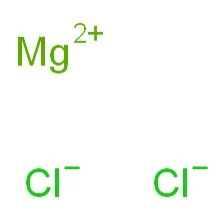
MgCl2 · 6H2O, 95.21 (anhydrous), 203.30 (hexahydrate)
Synonyms: brine, brine slice
Physical and chemical properties
Colorless to white crystal or powder, odorless and bitter. It is extremely soluble in water (160g / 100mL, 20 ℃) and ethanol, and the aqueous solution is neutral. This product is hexahydrate at normal temperature, and can also have dihydrate. It is easy to absorb moisture, and will be weathered and lose crystal water when placed in dry air. The water content may vary with temperature. 2 molecules of crystal water were lost at 100 ℃.
Anhydrous magnesium chloride is a colorless hexagonal crystal with a melting point of 708 ° C and a relative density of 2.177. Natural magnesium chloride exists in seawater and brine. Magnesium chloride hexahydrate can be hydrolyzed by heating to produce magnesium oxide and basic magnesium chloride. Magnesium and chlorine can be produced by electrolysis of anhydrous magnesium chloride in molten state. Magnesium hydroxide precipitates are formed in alkaline environment. Brine, a by-product of salt production from sea water, is concentrated into carnallite (KCl · MgCl2 · 6H2O), cooled to remove potassium chloride, and then concentrated, filtered, cooled and crystallized.
Toxicological basis
① LD50: greater than 800mg / kg (BW) in rats.
②GRAS:FDA-21CFR 182.5446,182.1426.
③ ADI: not required (FAO / WHO, 1994).
Application
Stabilizer and Coagulators
GB 2760-2014 stipulates that bean products should be used in an appropriate amount according to production needs.
The reference dosage in food processing: when preparing soybean products, the product is dissolved in water before adding. The soybean milk solidifies quickly, but the soybean products have poor water holding capacity, are easy to break, and have a heavy bitter taste. The usage amount is 2% ~ 3% of the soybean milk raw materials.
When making wine, magnesium chloride can be used to adjust the water hardness. Japanese Regulations: sake production is used as filter aid, and fish cake production is used as water removing agent, with an amount of 0.05% ~ 0.1%. Surimi products are used as tissue improvers (combined with polyphosphate), mainly as elastic enhancers of surimi products. Wheat flour treatment agent, dough quality improver, maltification treatment agent, etc.
Hot Tags: magnesium chloride, manufacturers, suppliers, factory, wholesale, custom